
When developing a new precision-machined component, engineers naturally focus on performance, functionality, material selection, and dimensional requirements. But another important question deserves attention early in the design process. Is the part designed to be manufactured efficiently, consistently, and cost-effectively?
Even a technically sound design can introduce unnecessary manufacturing challenges. Complex geometries, overly restrictive tolerances, difficult-to-machine features, and material choices can all affect production costs, lead times, and repeatability.
That’s why selecting the right precision parts machining partner should involve more than comparing quotes. An experienced manufacturing partner can help identify opportunities to improve manufacturability before a part reaches production.
At Pazmac, we believe collaboration between engineering and manufacturing teams is essential to delivering better outcomes.
Are You Involving Your Machining Supplier Early Enough?
One of the most valuable opportunities to improve manufacturability occurs before a design is finalized.
When engineers and machinists collaborate early, potential manufacturing challenges can be identified before they become costly production problems.
Early discussions can help answer important questions:
- Can the part geometry be simplified without compromising performance?
- Are all specified tolerances necessary for the intended application?
- Could an alternative material provide comparable performance with better machinability?
- Can multiple machining operations be consolidated?
- Are there features that could create unnecessary inspection or production challenges?
Addressing these questions during design development can reduce the need for engineering revisions, additional setups, and costly rework.
The earlier manufacturability enters the conversation, the greater the opportunity to influence cost, quality, and delivery.
What Can a Drawing Review Reveal?
An engineering drawing communicates how a component should be manufactured and inspected. However, not every drawing reflects the most efficient approach to machining.
A knowledgeable precision machining supplier can review drawings to identify opportunities for improvement while respecting the functional and engineering requirements of the part.
For example, a drawing review might reveal:
Overly restrictive tolerances: Tight tolerances are essential for critical features, but applying them unnecessarily can increase machining time, inspection requirements, and production costs.
Complex geometries: Deep pockets, thin walls, difficult internal features, or limited tool access may require specialized tooling or additional operations.
Surface finish requirements: Specifying a finer surface finish than the application requires can introduce additional processing time and expense.
Material considerations: Some materials are more challenging to machine, affecting tooling selection, cutting speeds, cycle times, and overall costs.
A collaborative drawing review provides an opportunity to distinguish between requirements that are critical to performance and those that may be adjusted without compromising the finished component.
Could a Different Machining Strategy Improve Efficiency?
Two suppliers may quote the same component but approach its production very differently.
The difference often comes down to machining experience, equipment capabilities, process planning, and the ability to anticipate production challenges.
At Pazmac, our advanced CNC machining capabilities include multi-axis mill-turn technology designed to manufacture complex precision components.
Combining turning and milling operations within a single machining platform can provide important advantages, depending on the part geometry and production requirements.
These may include:
- Reducing the number of setups and part transfers.
- Improving consistency by minimizing repeated repositioning.
- Reducing opportunities for handling errors.
- Consolidating operations to improve production efficiency.
- Supporting tighter control of complex features and dimensional relationships.
The objective isn’t simply to machine a part faster. It’s to develop a repeatable manufacturing process that consistently meets engineering requirements while avoiding unnecessary complexity.
Where Are the Hidden Costs in Your Part Design?
The lowest initial machining quote doesn’t always represent the lowest total manufacturing cost.
Additional expenses can emerge through extended cycle times, specialized tooling, complex inspection procedures, secondary operations, or inconsistent production results.
For manufacturers producing parts for aerospace, defence, subsea, energy, and other demanding industries, these considerations become especially important.
An experienced machining partner can help evaluate the broader cost implications of a design.
For example, could a minor change in geometry eliminate a secondary operation? Could adjusting a noncritical tolerance simplify inspection? Could a different machining sequence improve consistency across multiple production runs?
Individually, these changes may seem small. Collectively, they can have a meaningful impact on manufacturing efficiency, cost, and delivery reliability.
Improving manufacturability isn’t about compromising design intent. It’s about achieving the required performance through a smarter manufacturing process.
Does Your Supplier Understand the Importance of Repeatability?
A successful prototype is an important milestone. But can the same part be manufactured consistently as production requirements evolve?
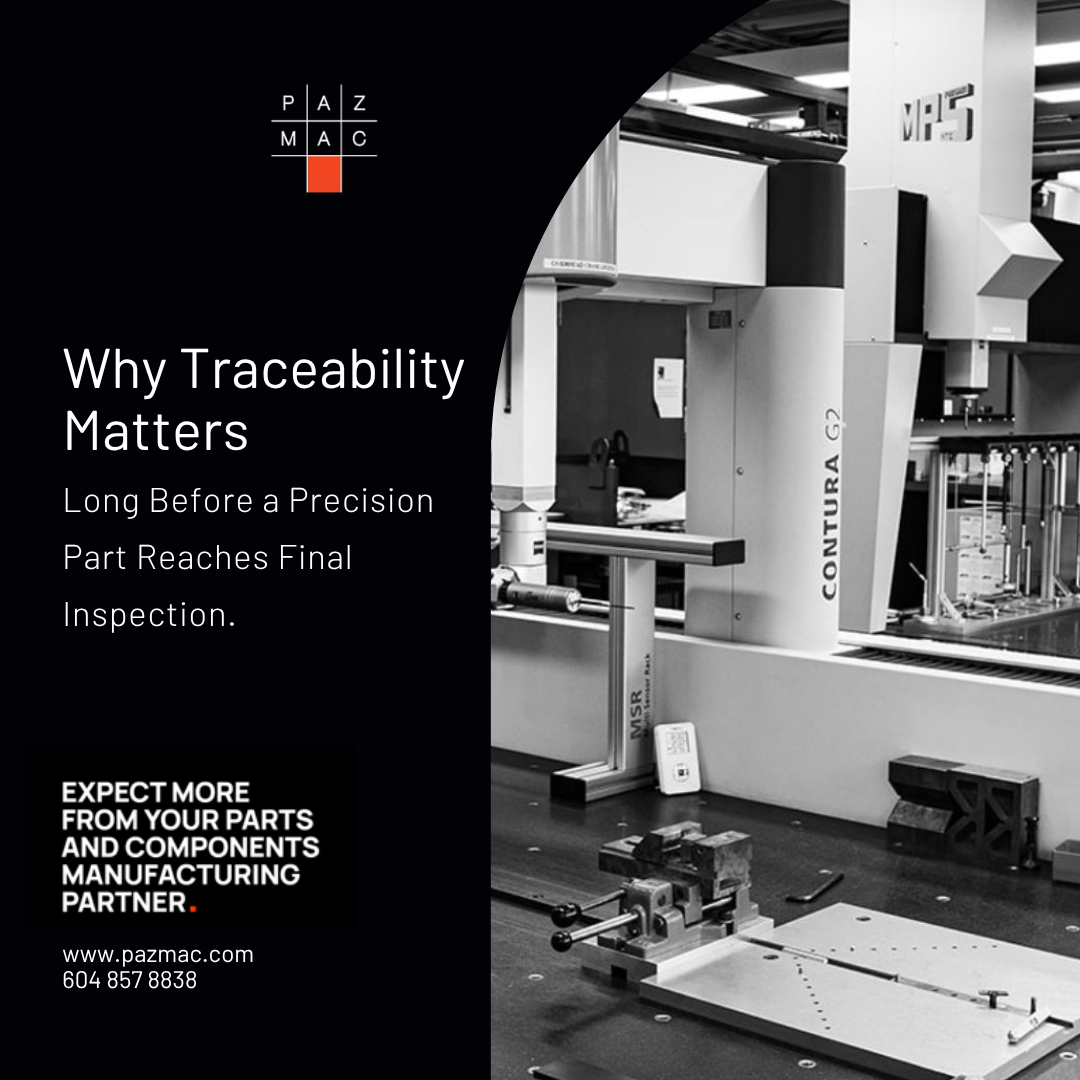
Manufacturability must consider more than whether a component can be machined once. It should also address process stability, inspection requirements, traceability, and repeatable quality.
This is particularly important for customers operating in highly regulated industries.
With ISO 9001:2015 and AS9100D quality management certifications, Pazmac understands the importance of documented processes, inspection, traceability, and continuous improvement.
By considering these requirements alongside machining strategy, manufacturers can make more informed decisions about how parts are designed, produced, and verified.
Better Collaboration. Better Manufacturing Outcomes.
Precision machining should be more than a transactional relationship between a customer submitting a drawing and a supplier returning a quote.
The greatest value often comes from the conversations that happen between those two steps.
When engineers and manufacturing specialists share knowledge, challenge unnecessary complexity, and explore alternative approaches, they create opportunities to improve part quality, control costs, and reduce production risk.
At Pazmac, our Expect More philosophy reflects our commitment to delivering more than precision-machined components. It means bringing experience, technical knowledge, advanced manufacturing capabilities, and a collaborative approach to every customer relationship.
Could Your Next Part Be Easier to Manufacture?
Before finalizing your next precision-machined component, consider involving Pazmac in the conversation.
Our team welcomes the opportunity to review your manufacturing requirements, discuss potential challenges, and explore machining strategies that support quality, efficiency, and long-term production success.
Expect more.